What Is the 50/30/20 Rule? (2026)
The 50/30/20 rule is a simple budget that splits your after-tax income into three buckets: 50% for needs, 30% for wants, and 20% for savings and debt payoff. It is popular because it is easy to remember and flexible, no tracking every coffee, just keeping three categories roughly in balance.
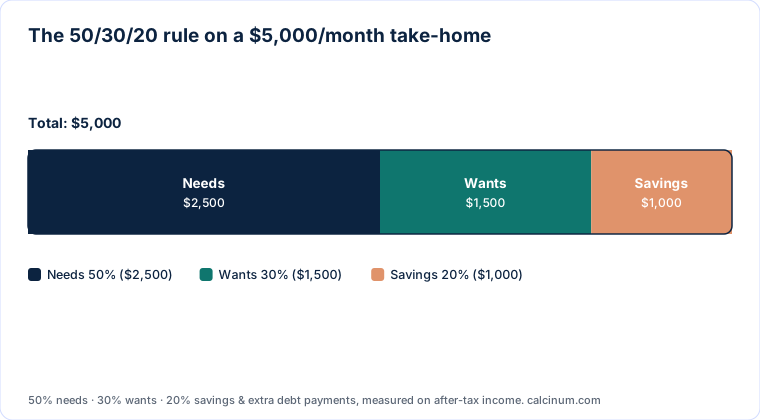
How the three buckets work
The percentages apply to your take-home (after-tax) pay:
| Bucket | Share | What goes here |
|---|---|---|
| Needs | 50% | Rent/mortgage, utilities, groceries, insurance, minimum debt payments, transportation |
| Wants | 30% | Dining out, travel, subscriptions, hobbies, shopping |
| Savings & debt | 20% | Emergency fund, retirement, investments, extra debt payments |
“Needs” are things you cannot easily skip; “wants” are everything that makes life nicer but is optional.
A worked example
Take-home pay of $4,000 per month:
- Needs (50%): $2,000
- Wants (30%): $1,200
- Savings & debt (20%): $800
If your needs are eating more than 50% (common in high-cost cities), that is a signal to either increase income or trim the “wants” bucket until the math works.
Why people like it
- Simple. Three categories instead of dozens of line items.
- Flexible. You decide what counts as a want versus a need.
- Balanced. It guarantees you save something (20%) while still allowing guilt-free spending (30%).
When to adjust the ratios
The 50/30/20 split is a starting point, not a law:
- Aggressive savers / FIRE seekers often flip it toward 50/20/30 or more, pushing savings well above 20%.
- High earners can comfortably save more than 20%.
- Paying off high-interest debt? Temporarily shrink “wants” and pour the difference into the 20% bucket.
- High cost of living? Needs may run above 50% for a while; aim to bring it back down as income grows.
Bottom line
- 50% needs, 30% wants, 20% savings/debt, all based on after-tax income.
- It is a flexible framework, adjust the ratios to your goals and cost of living.
- The non-negotiable part is the 20% (or more) going to savings and debt.
Plug in your numbers with our budget calculator, and find your after-tax income with the take-home pay calculator. This article is general information, not financial advice.
Related Calculators
Related articles

Rakesh Choudhary, PhD · Founder & Editor
Rakesh Choudhary, PhD, is the founder of Calcinum. A sociologist by training, he builds every calculator on the site and maintains its 2026 federal and state tax data, sourced from primary references (IRS, SSA, state revenue departments, DFAS) and re-verified whenever the law changes. Tax data is sourced from primary references (IRS, state revenue departments, SSA, DFAS) and re-verified annually each tax year.
Editorial standards: Our tax and financial figures come from primary sources — the IRS, SSA, and state revenue departments — and are reviewed against the current tax year before publication. See our full methodology & accuracy for our sourcing and review process.
Not financial advice: This article is for general informational purposes only. Calcinum does not provide regulated tax, legal, or investment advice. Consult a qualified professional for decisions specific to your situation.