What Is a Good Credit Score? (2026)
A “good” credit score is generally 670 or higher on the FICO scale, and 740 or above is considered “very good” to “exceptional.” Credit scores run from 300 to 850, and where you land determines whether you get approved for loans and credit cards, and how good a rate you are offered. The higher your score, the less you pay to borrow. (Source: CFPB on credit scores)
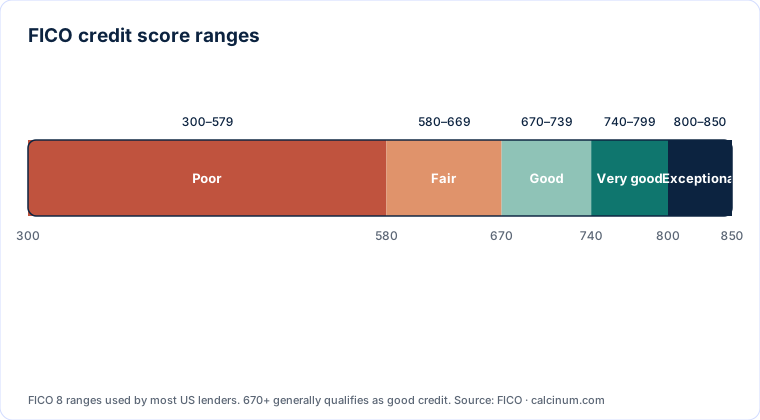
FICO score ranges
| Range | Rating |
|---|---|
| 800–850 | Exceptional |
| 740–799 | Very good |
| 670–739 | Good |
| 580–669 | Fair |
| 300–579 | Poor |
VantageScore, the other major model, uses the same 300 to 850 scale with similar tiers. Most lenders consider anything 670 and up to be solid, and the best rates typically go to scores 740 and above.
What makes up your score
FICO weighs five factors:
| Factor | Weight | What it means |
|---|---|---|
| Payment history | 35% | Do you pay on time? The single biggest factor. |
| Amounts owed (utilization) | 30% | How much of your available credit you use. |
| Length of credit history | 15% | How long your accounts have been open. |
| Credit mix | 10% | A blend of cards, loans, etc. |
| New credit | 10% | Recent applications and new accounts. |
The two you control most day to day are paying on time and keeping balances low. Together they make up nearly two-thirds of your score.
Why it matters
A good score is worth real money:
- Lower interest rates on mortgages, auto loans, and credit cards, potentially tens of thousands of dollars over time.
- Easier approval for loans, cards, and apartment rentals.
- Lower deposits for utilities and cell phone plans.
- In many states, lower auto and home insurance premiums.
How to improve your score
- Pay every bill on time, set up autopay so you never miss one.
- Lower your utilization to under 30% (ideally under 10%) of your credit limits.
- Keep old accounts open to lengthen your history.
- Apply for new credit sparingly, each hard inquiry dings you slightly.
- Check your reports at annualcreditreport.com and dispute any errors.
Improvements from paying down balances can show up in as little as one to two months; rebuilding from missed payments takes longer.
Bottom line
- 670+ is good, 740+ is very good, on a 300 to 850 scale.
- Payment history (35%) and utilization (30%) drive most of your score.
- A higher score lowers what you pay to borrow, often by thousands.
Tackle the utilization factor fastest with our credit card payoff calculator or debt snowball calculator. This article is general information, not financial advice.
Related Calculators
Related articles

Rakesh Choudhary, PhD · Founder & Editor
Rakesh Choudhary, PhD, is the founder of Calcinum. A sociologist by training, he builds every calculator on the site and maintains its 2026 federal and state tax data, sourced from primary references (IRS, SSA, state revenue departments, DFAS) and re-verified whenever the law changes. Tax data is sourced from primary references (IRS, state revenue departments, SSA, DFAS) and re-verified annually each tax year.
Editorial standards: Our tax and financial figures come from primary sources — the IRS, SSA, and state revenue departments — and are reviewed against the current tax year before publication. See our full methodology & accuracy for our sourcing and review process.
Not financial advice: This article is for general informational purposes only. Calcinum does not provide regulated tax, legal, or investment advice. Consult a qualified professional for decisions specific to your situation.