What Is a Deductible? (2026)
A deductible is the amount you pay out of your own pocket for a covered loss before your insurance company starts paying. If your car insurance has a $500 deductible and you have a $3,000 repair, you pay the first $500 and insurance covers the remaining $2,500. Deductibles exist on most types of insurance, and they have a direct trade-off with your premium. (Source: IRS Publication 17)
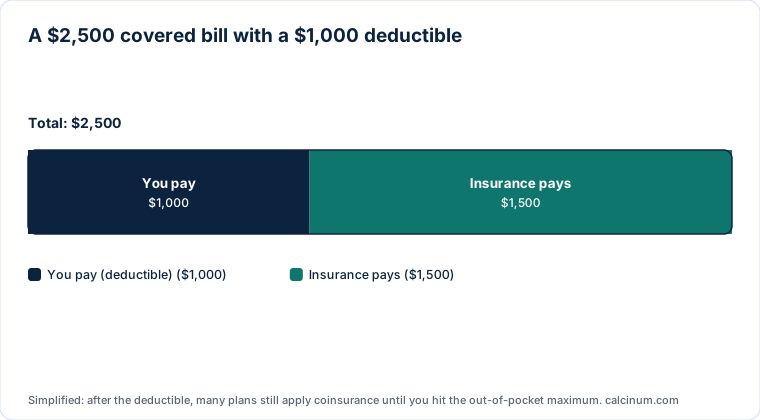
The premium trade-off
This is the key idea: the higher your deductible, the lower your premium, and vice versa.
- High deductible → lower monthly premium. You take on more risk, so the insurer charges less.
- Low deductible → higher monthly premium. The insurer pays sooner, so it charges more.
Choosing well means weighing how much you could comfortably pay out of pocket against how much you want to save each month. A solid emergency fund makes a higher deductible (and lower premium) much safer.
How deductibles work by insurance type
| Insurance | How the deductible applies |
|---|---|
| Health | An annual amount you pay before the plan covers most care; after it, you pay coinsurance up to your out-of-pocket max |
| Auto | A per-claim amount on collision and comprehensive coverage |
| Home | A per-claim amount (sometimes a percentage of the home’s value for things like wind or hail) |
Note that health deductibles are usually annual (they reset each year), while auto and home deductibles typically apply per claim.
Deductible vs. premium vs. out-of-pocket max
These get confused:
- Premium: what you pay regularly (monthly) just to have the insurance.
- Deductible: what you pay before coverage kicks in.
- Out-of-pocket maximum (health): the most you will pay in a year before insurance covers 100%. See what is an out-of-pocket maximum.
How to choose your deductible
- Pick a deductible you could actually afford to pay tomorrow if you had a claim.
- If you have a healthy emergency fund, a higher deductible can save you money on premiums over time.
- If money is tight, a lower deductible costs more monthly but protects you from a big surprise bill.
Bottom line
- A deductible is what you pay before insurance pays, on health, auto, and home policies.
- Higher deductible = lower premium; lower deductible = higher premium.
- Choose a deductible you can cover from savings, and let your emergency fund guide the trade-off.
Plan for deductibles in your budget and emergency fund. This article is general information, not insurance or financial advice.
Related Calculators
Related articles

Rakesh Choudhary, PhD · Founder & Editor
Rakesh Choudhary, PhD, is the founder of Calcinum. A sociologist by training, he builds every calculator on the site and maintains its 2026 federal and state tax data, sourced from primary references (IRS, SSA, state revenue departments, DFAS) and re-verified whenever the law changes. Tax data is sourced from primary references (IRS, state revenue departments, SSA, DFAS) and re-verified annually each tax year.
Editorial standards: Our tax and financial figures come from primary sources — the IRS, SSA, and state revenue departments — and are reviewed against the current tax year before publication. See our full methodology & accuracy for our sourcing and review process.
Not financial advice: This article is for general informational purposes only. Calcinum does not provide regulated tax, legal, or investment advice. Consult a qualified professional for decisions specific to your situation.